From Feeling to Form: Designing Sensory Storytelling in CPG
In our recent exploration of Sensory Storytelling, we examined why brands that engage the senses do more than capture attention—they create memory. Sound, texture, movement, scent, and taste bypass logic and land directly in emotion, helping people feel something before they ever think about it.
The Why
CPG experiences are rich with claims, but thin on feeling.
Today’s shelves are crowded with functional benefits, nutritional language, and rational proof points. But as categories become more interchangeable, information alone no longer differentiates. Consumers are not just evaluating products, they are responding to how those products make them feel.
Sensory storytelling responds to this shift. It recognizes that emotion precedes understanding, and that memory is formed not through explanation, but through experience.
The Mission
Translate belief into something people can feel.
Sensory storytelling is not a moment or a layer added at the end. It is a system that turns brand belief into physical, emotional, and intuitive experience.
When designed well, experience does not explain the story. It embodies it. Design becomes the mechanism that turns meaning into action.
The Execution
Move Gooder: When belief becomes experience
The Move Gooder experience, inspired by Goodles better-for-you mac and cheese, begins with a deceptively simple provocation: What if better-for-you did not feel restrictive, but joyful?
In a category dominated by nutritional claims and functional language, this experience takes a different stance. Wellness does not need to feel clinical. Movement does not need to feel prescriptive. Flavor does not need to come with guilt.
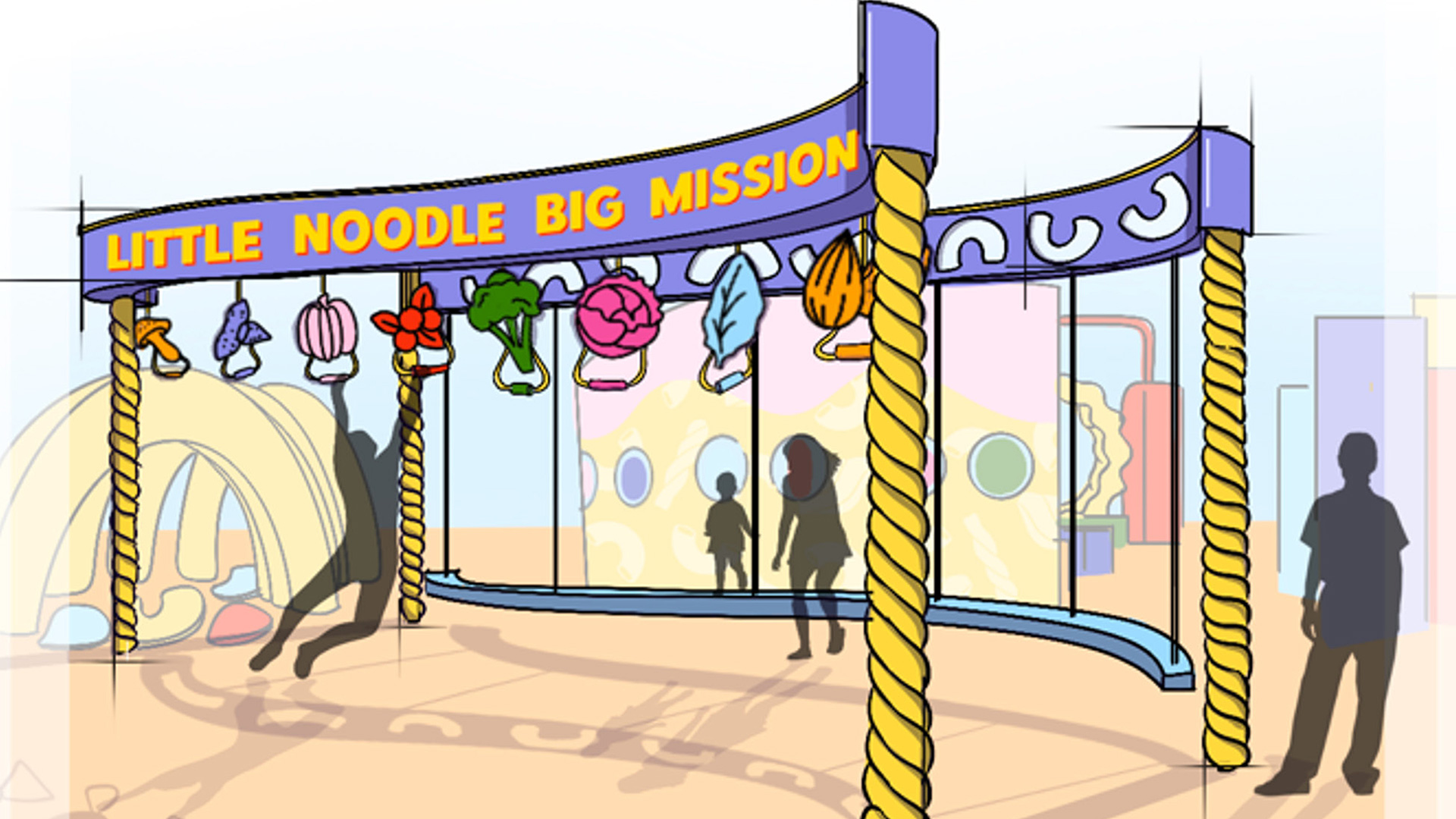
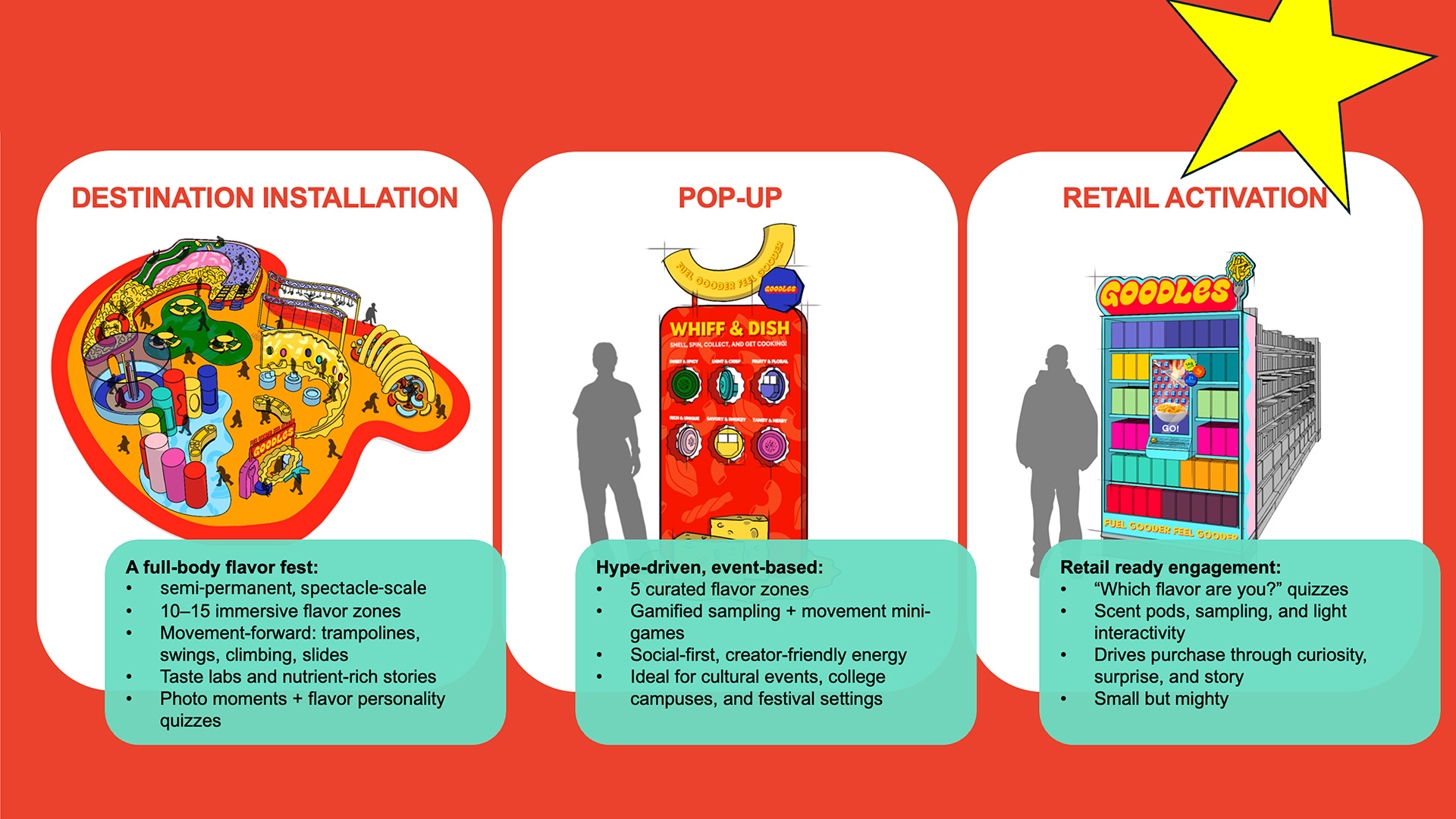
Those beliefs became the foundation for the experience—not just the messaging. Rather than creating a single activation, the Move Gooder was designed as a sensory ecosystem: a set of scalable experiences that translated “feeling good” into something people could see, touch, smell, move through, and participate in.
Three design shifts brought that system to life:
01 From communication to embodiment
This experience does not rely on explanation to make its point. Physical play, exaggerated scale, tactile materials, and forward-moving environments turns abstract benefits like protein, fiber, and wellness into something people could interact with directly. Guests don’t just learn the brand’s values, they feel them.
Design takeaway: If someone has to read it to understand it, the sensory story is not finished yet.
02 From products to sensory worlds
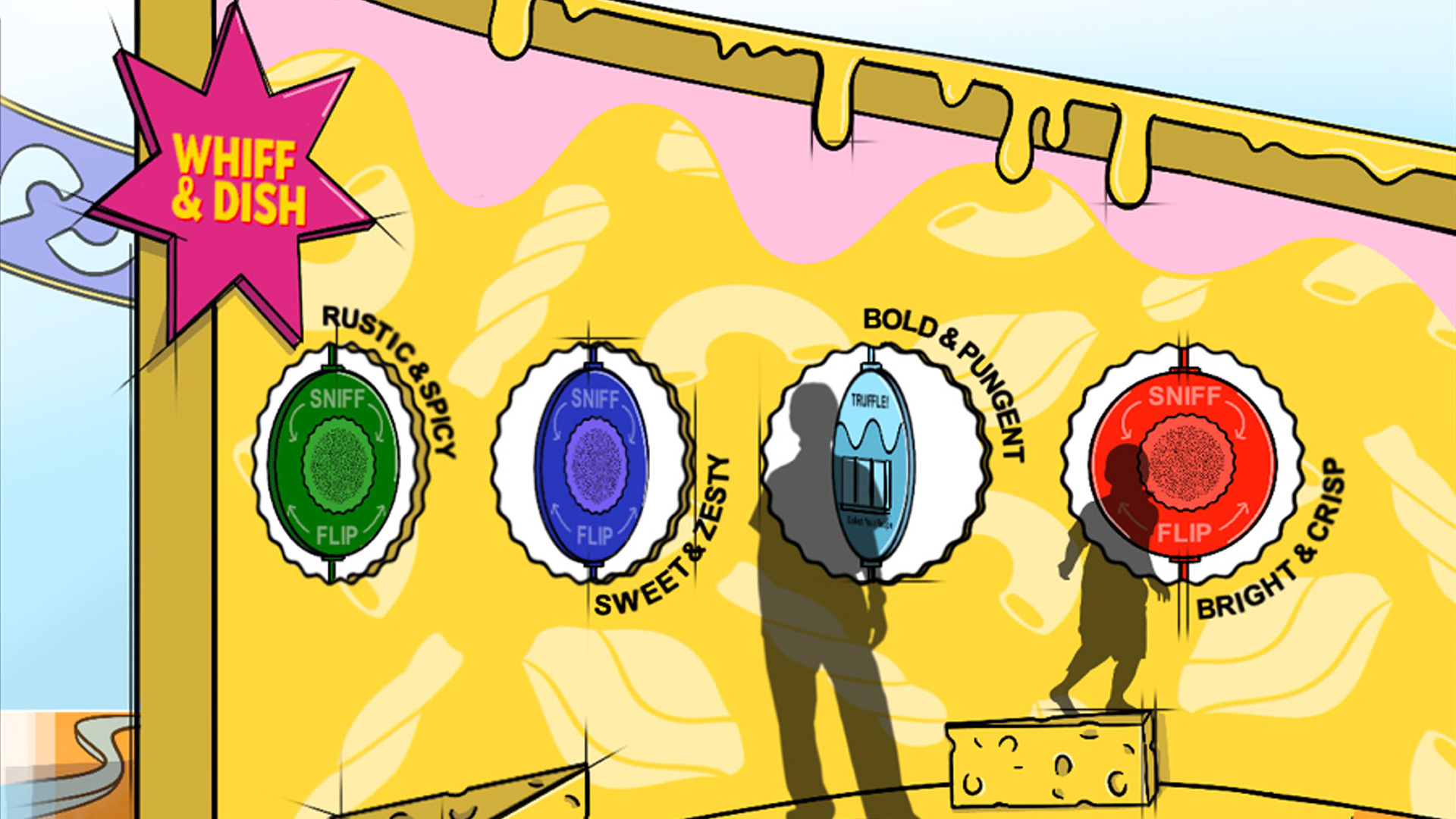
Instead of treating flavors as SKUs, this experience treats them as characters. Each flavor becomes its own world, with distinct color, energy, motion, and personality. Visual humor, bold graphics, scent cues, and physical challenges allowed flavor to lead the experience, while nutrition followed naturally.
Design takeaway: Sensory storytelling works best when products stop acting like items on a shelf and start acting like environments you can step into.
03 From passive moments to participation
The most important design choice was not aesthetic, it was behavioral. Every expression of the Goodles experience asks something of the guest: move your body, use your senses, make a choice, take an action. Participation is non-negotiable, whether at destination scale, pop-up, or in-store activation.
Design takeaway: Sensory storytelling does not just ask people to feel something. It invites them to do something.
The Impact
CPG brands do not lack stories. They lack designed experiences that make those stories felt.
This expereince shows that even in everyday categories, design can move beyond persuasion toward participation… And beyond differentiation toward resonance. Sensory storytelling is not about spectacle for its own sake. It is about translation.
Translating belief into behavior.
Translating product into experience.
Translating values into moments people remember.
Designing for Resonance
When brands prioritize emotion before explanation, participation before persuasion, and feeling before function, they create more than engagement. They create meaning. And meaning is what people carry with them long after the moment ends.
At WD, we believe the most powerful brand stories are not told. They are designed. The question is not whether your brand has something to say. It is whether people can feel it. Explore our Create to Resonate campaign to discover more bold ideas shaping the future of brand and consumer connection.
Relevant Content
-
![Wayfind - Have Functional Beverages Gone Too Far?]() Wayfind
WayfindHave Functional Beverages Gone Too Far?
An Unofficial Review of CPG Sodas From Trending LA Grocers
-
![Solution Story - Purina LAB9]() Solution Story
Solution StoryPurina LAB9
Designing a Space Built for Pet-Centric Innovation
-
![Inspiration - Solutions]() Inspiration
InspirationSolutions
-
![Point of View - Human-Centered Connected Commerce – From Store to Site]() Point of View
Point of ViewHuman-Centered Connected Commerce – From Store to Site
Innovative collaboration and human-centered design are essential for driving retail success