Building Tomorrow’s Drive-Thru Today
A WD Innovator Series Conversation: Inside White Castle’s Prototype that Blends AI, Robotics, and a Century of Crave Culture
Estimated Read Time: 7 Minutes
White Castle has been feeding Cravers for over a century—but what does the next 100 years look like? Together, White Castle and WD set out to answer that question with a first-of-its-kind prototype: a reimagined restaurant experience built from the ground up around the way guests live, order, and connect with the brand today. Think AI-powered ordering, robotics, a kitchen designed for transparency, and an exterior that transforms after dark into something unmistakably its own. We sat down with Jamie Richardson, White Castle’s Chief Marketing Officer, and Chris Shaffery, VP of Operations, alongside the WD team, to talk through what it took to bring the Castle of the Future to life.
Setting the Stage
Question: What sparked the need for this prototype and what were you hoping to fundamentally change?
White Castle Answer: Understanding as a 105-year-old family-owned business how important it is to remain visible, recognizable and RELEVANT! There’s tension between the foundation that makes you successful and needing to constantly evolve to be there for the customers not only of today, but tomorrow as well. We wanted a chance to challenge our thinking and learn what’s next.
Question: When you first heard that vision, what stood out as the biggest opportunity—or challenge—to solve?
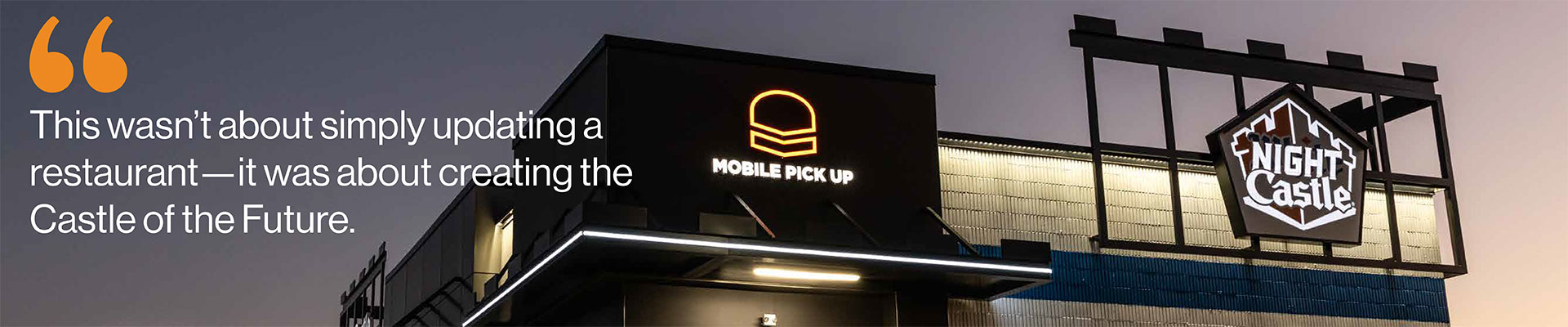
WD Answer: This wasn’t about simply updating a restaurant—it was about creating the Castle of the Future. With strong momentum around automation and AI already in play, the opportunity was to weave those capabilities into a new operating system from the ground up. The real challenge was balancing emotional connection, operational excellence, and innovation in a way that still feels unmistakably White Castle—and building an operating system scalable across formats and volumes, for both new builds and remodels.
Balancing Legacy with Innovation
Question: White Castle has one of the most recognizable identities in QSR. How did you approach evolving it without losing what makes it iconic?
WD Answer: We approached it as evolution, not reinvention. White Castle’s architecture, heritage, and nostalgia are core to the brand, so preserving that equity was critical—our goal was to honor those recognizable elements while elevating them for the next generation of Cravers. We also made sure the operating system built in dedicated time for team members to engage in genuine hospitality, so the human connection that defines White Castle was never sacrificed in the name of efficiency.
Question: What elements of the design were non-negotiable from a brand perspective?
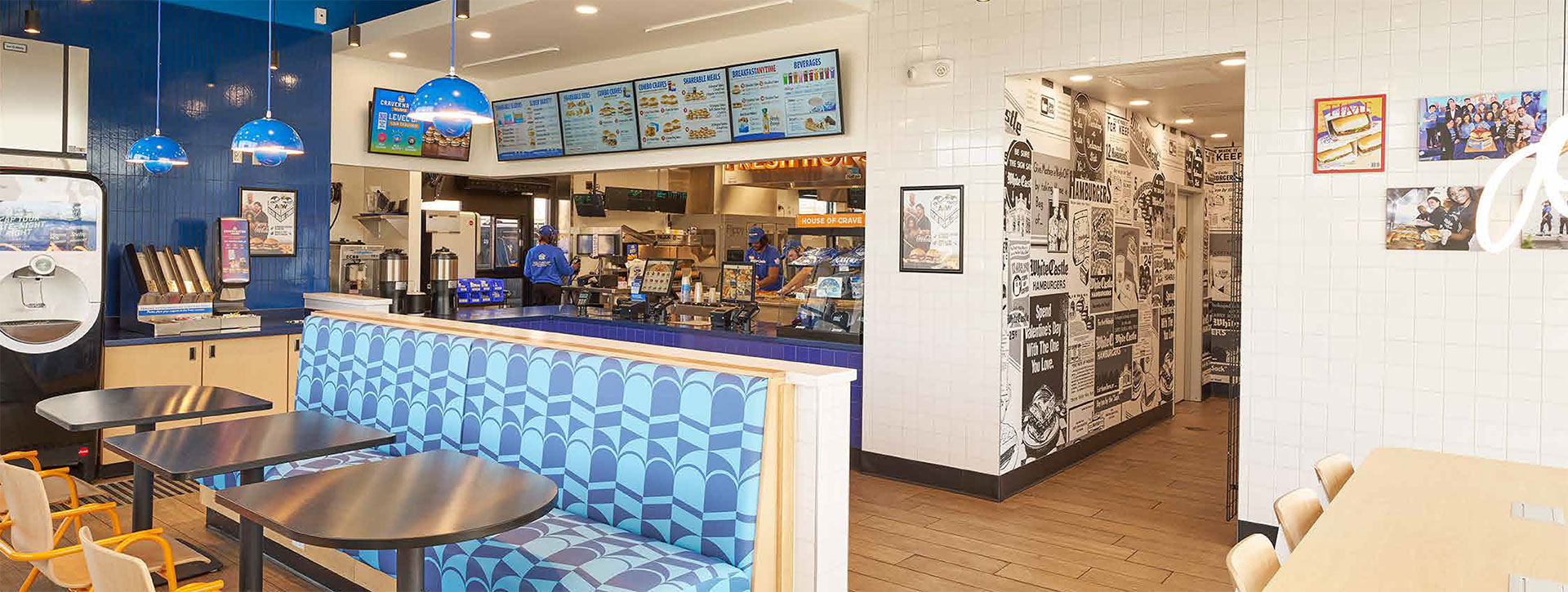
White Castle Answer: Trust marks for our brand–like our nod to our Castle crenellations and some type of tower to proclaim to all who visit that they have arrived–and comfort and an even better work environment for Team Members.
Rethinking the Customer Journey
Question: How have your customers changed and how did that influence what this experience needed to become?
White Castle Answer: In our world change is constant. A far bigger number of our customers are ordering through third party delivery apps or using their White Castle Craver Nation app to place a mobile order they come and pick up. They are a lot more likely to use the drive thru today than they were 7 years ago. They want to be able to find us quickly and easily–not search for a camouflaged sign to know where to turn into our lot. And they expect a degree of emotional reward as part of what we promise in our vision to ‘feed the souls of craver generations everywhere.’
Question: What was the biggest “aha” moment in redesigning the customer journey?
WD Answer: Today’s guests no longer separate convenience from experience—they expect both at once. They want speed and simplicity, but they still crave hospitality and emotional connection. That insight shaped everything: every moment had to feel frictionless without ever feeling forgettable. On the operations side, that meant intentionally building hospitality into the operating system so it was a designed part of the flow, not left to chance.
Question: What part of the new experience do you think customers will notice most immediately?
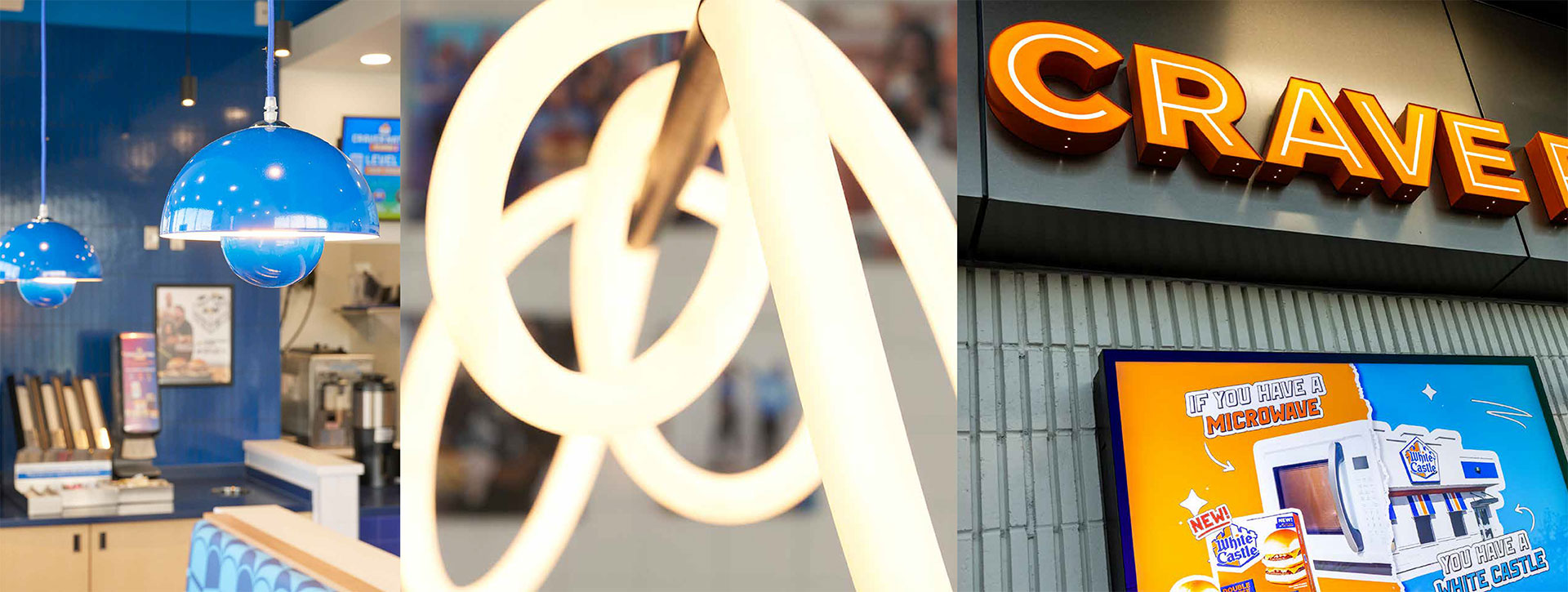
White Castle Answer: Well, if they arrive once the sun comes down, they’ll discover that White Castle has become Night Castle–as visible in our one-of-a-kind marquee sign that greets them. They’ll also discover it’s very easy to pick up a mobile order–no matter what time they happen by.
Technology with Purpose
Question: There’s a lot of tech layered into this prototype… AI ordering, robotics, kiosks. How did you decide what actually adds value vs. what’s just noise?
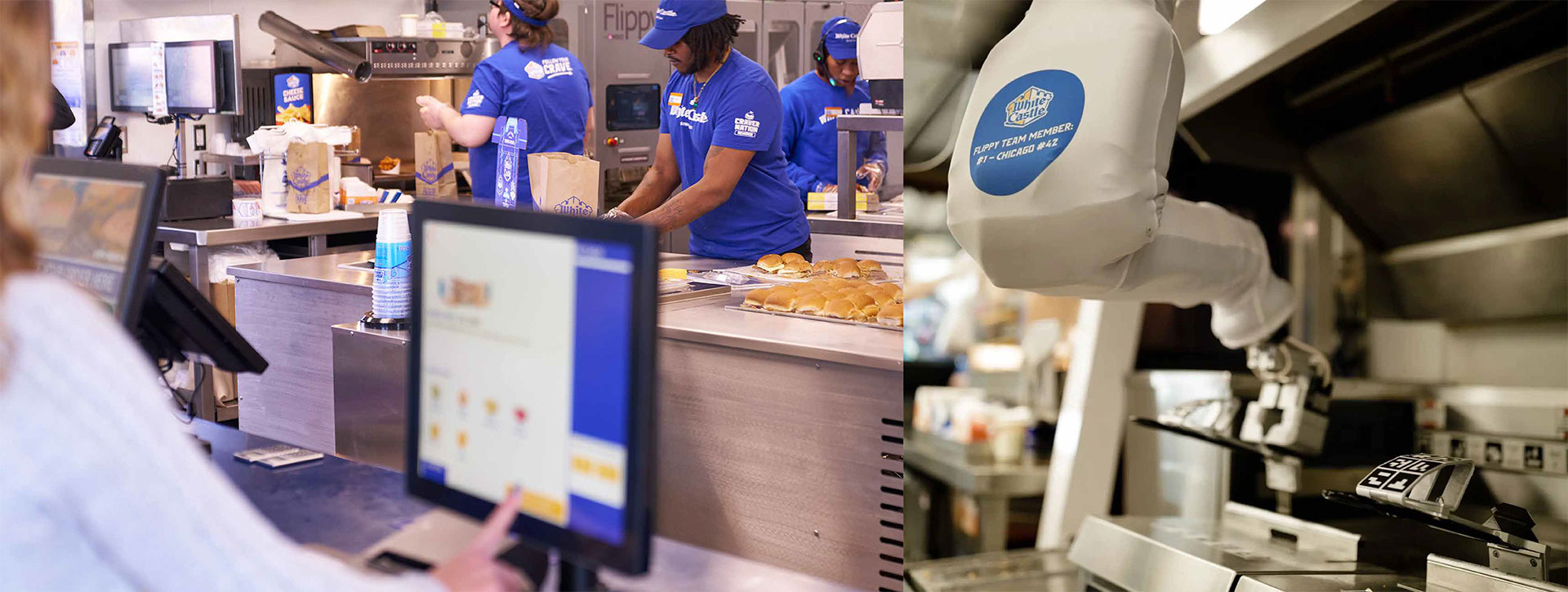
WD Answer: Our philosophy was simple: technology should enhance the experience, not distract from it. Every piece of tech had to answer one question—does this make life easier for the Craver or the Team Member? If it improved speed, reduced friction, or elevated hospitality, it stayed. We backed that up with a rigorous assessment comparing locations with and without these tools, so every integration decision was grounded in evidence, not just excitement.
Question: How do you think about the role of technology in hospitality—especially for a brand built on craveability and nostalgia?
White Castle Answer: Technology has always been about empowering people—taking friction out of the experience for the customer—and making the day easier for our team so they can concentrate on what we do best—sharing our heart for hospitality.
Designing for Operations & Teams
Question: What operational pain points were you most focused on solving behind the scenes?
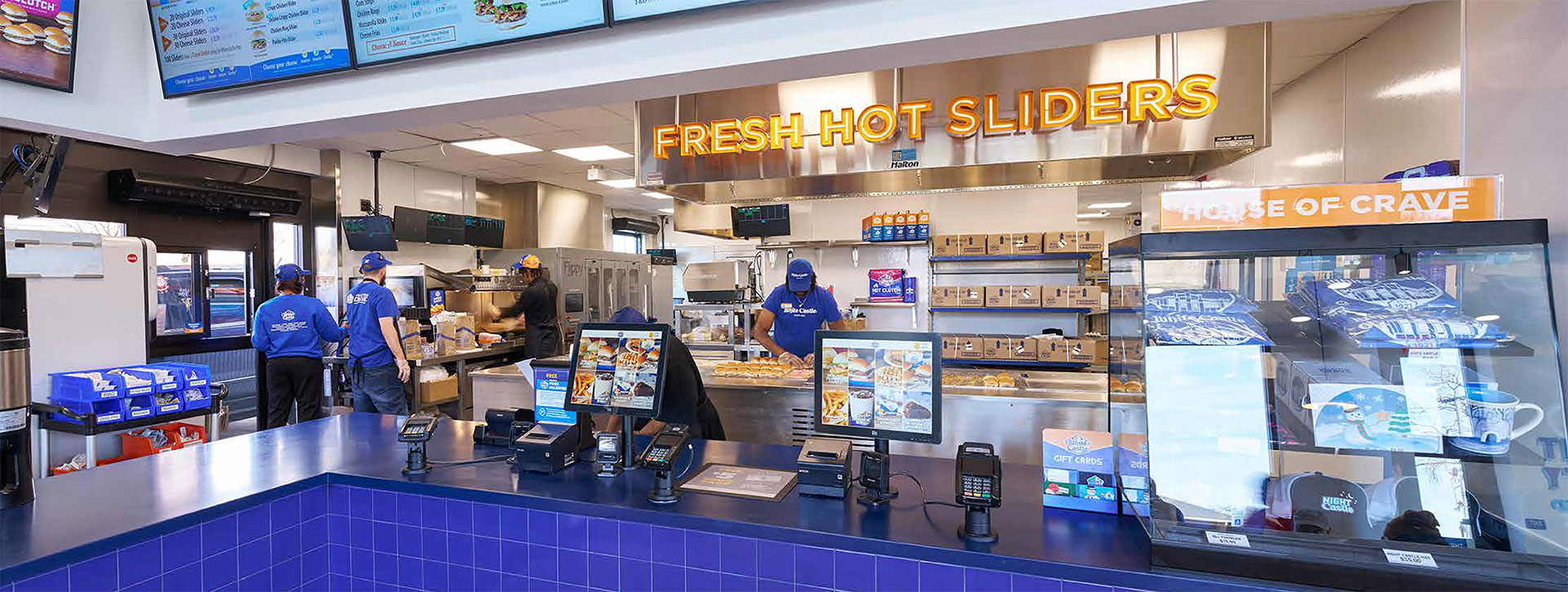
WD Answer: We focused on creating intentional spaces for team members, because supporting the team experience ultimately supports the Craver experience. On the operational side, that meant improving speed of service and throughput alongside seamless technology integration—and developing an operating system scalable enough to work for both new builds and remodels, keeping processes consistent across the entire system.
Question: How has this new environment changed things for your team members so far or how do you expect it to?
White Castle Answer: It has given them a great experience so far-from-new bright and clean surroundings, to providing a friendlier area for each of them to have team space, and a hospitality door that makes it easier to take care of our drive thru customers.
The Physical Space as Brand Story
Question: What did the physical space need to communicate about where White Castle is headed?
White Castle Answer: That White Castle is the epicenter of all crave satisfaction. That you can come to us and crave in comfort. We’re a beacon of hope that never wavers and we’ve got you covered.
Question: How did elements like lighting, layout, or features like the “Night Castle” come to life in response to that?
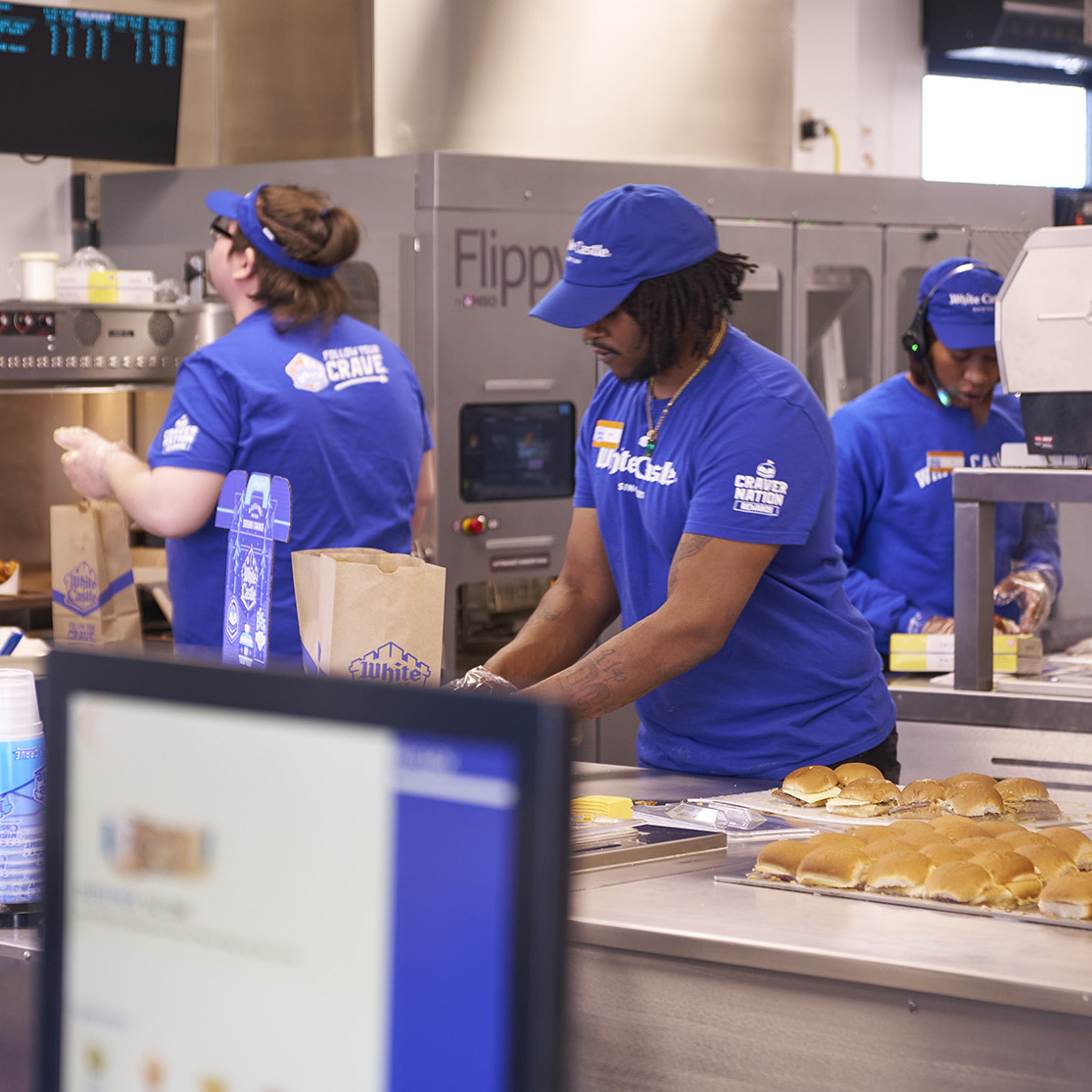
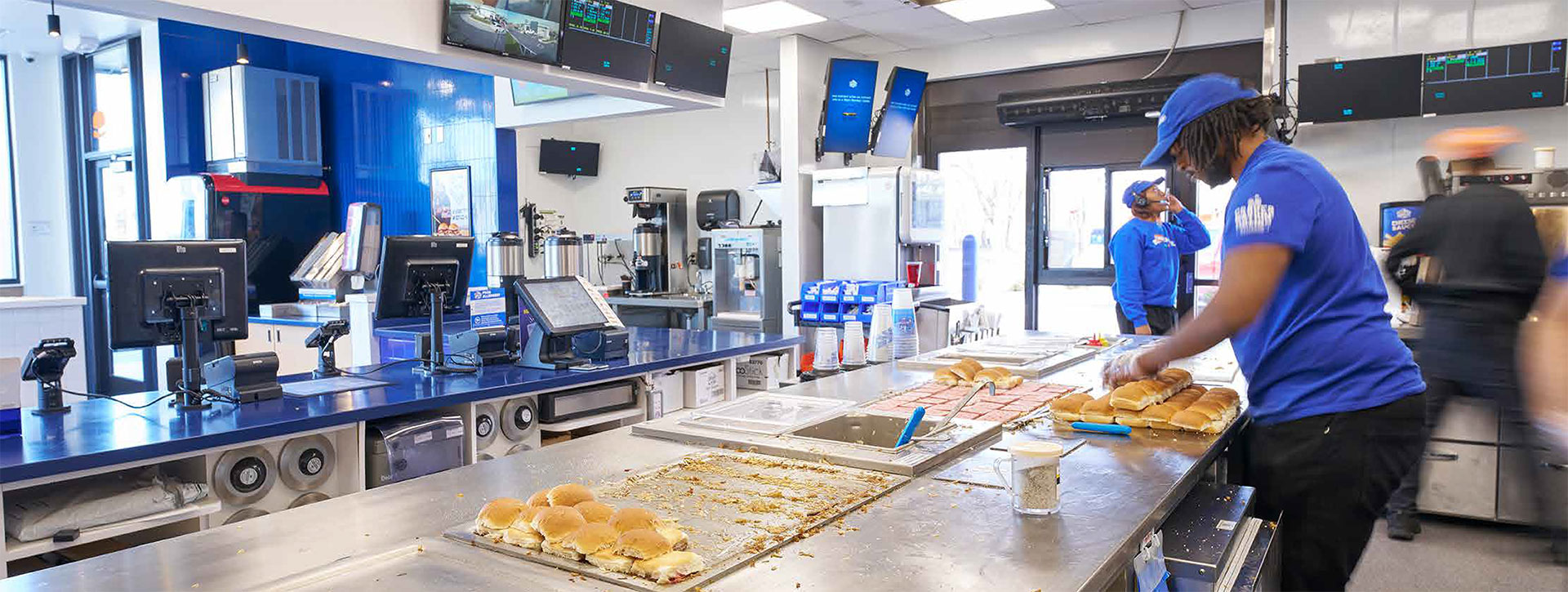
WD Answer: We designed the building itself to tell the brand story. Dynamic lighting, bold exterior cues, and the Night Castle concept help White Castle own key dayparts—especially late night—while creating energy and atmosphere that make it feel less like a restaurant and more like a beacon for craveability. Central to that was kitchen transparency, giving team members clear sightlines to guests and letting guests watch the iconic slider production process unfold.
Testing, Learning, and Scaling
Question: What elements of this prototype were designed to be tested vs. immediately scalable?
WD Answer: The updated operating system was built to be immediately scalable for both new builds and remodels. There will always be minor tweaks as any new system rolls out, but the core design goal was flexibility across formats and volumes—so the operational playbook stays consistent across the entire fleet without requiring a complete rethink each time.
Question: What are you watching most closely as this location operates?
White Castle Answer: Customer and team member satisfaction. We’ll look at all of our key metrics like we do for every Castle. We believe this investment provides us the opportunity to lean into tomorrow, today!
Lessons & What’s Next
Question: What did this project teach you about designing for modern QSR that you’ll carry forward?
WD Answer: The Castle of the Future reinforced that great QSR design is no longer just about speed—it’s about balancing efficiency with emotional connection. Modern QSR has to deliver for the guest, the team, the operations, and the brand all at once. And this project was a reminder that it’s equally important to bring new thinking back into existing locations, so the entire fleet benefits—not just the newest builds.
Question: What did this process teach you about your customers (or your brand) that you didn’t expect?
White Castle Answer: That we are better together—and having a partner willing to roll up their sleeves to work alongside us is a powerful way to learn and grow faster than we might have on our own.
Question: If this is the “Castle of Tomorrow,” what does the next evolution look like?
WD Answer: The next evolution is adaptability. The brands that will lead tomorrow are the ones that keep evolving with their customers while staying true to who they are—and this prototype gives White Castle a foundation that can flex alongside changing technology, operations, and Craver expectations.
White Castle Answer: Continuing to anticipate and solve problems and remove friction for customers and team membersmaybe even before they are able to tell us exactly what that source of momentary frustration might be. If we stay tuned in, ask good questions and then respond accordingly, we set ourselves up for future wins.
Relevant Content
-
News🗗
Ready, Set, Automate: Mapping Your Kitchen Automation Journey
Foodservice Equipment Reports
-
![Wayfind - Harnessing AI for Operational Excellence in Restaurants]() Wayfind
WayfindHarnessing AI for Operational Excellence in Restaurants
Integrating Artificial Intelligence (AI) Into Operations Is Not Just a Trend but a Necessity
-
![Wayfind - Feeding the Masses]() Wayfind
WayfindFeeding the Masses
Rethinking High-Volume Foodservice Operations
-
![Wayfind - The Restaurant of the Future Starts Where Customers Never Look]() Wayfind
WayfindThe Restaurant of the Future Starts Where Customers Never Look
Building a Prototype That Works Everywhere—Even Where It Already Exists