Becoming the Builders of Digital Infrastructure
Creating Strong Data from Design Through Construction
Estimated Read Time: 4 Minutes

You’ve probably seen it happen. A project wraps up, the models are handed off…and then the data disappears. Not literally, but functionally. It gets locked inside drawings, stranded in systems that don’t talk to each other, or simply recreated from scratch by the next team downstream. All that careful work, duplicated or discarded.
This is the problem at the center of our industry right now. Projects are moving faster, portfolios are growing larger, and teams are being asked to deliver more with fewer resources. But too often, design and construction are still treated as one-off efforts — optimized for drawings and handoffs, not for long-term value. The opportunity to change that is already in our hands.
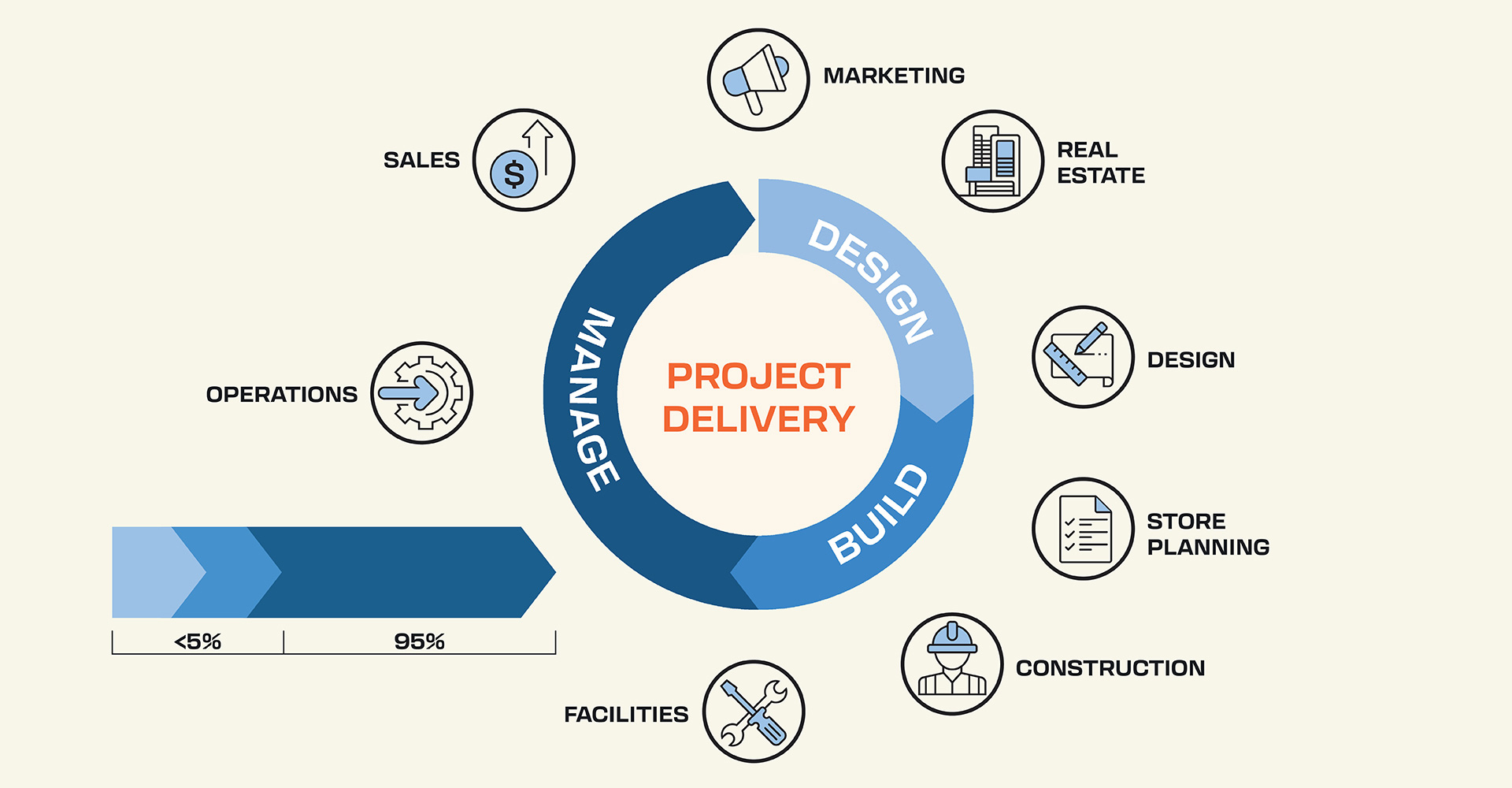
The same technologies we rely on for design can be leveraged as data tools. When used intentionally, they create information that flows across the entire project lifecycle — from design and construction into operations and management. The teams that unlock this aren’t just delivering better projects. They’re building digital infrastructure.
The Real Problem Isn’t a Lack of Data
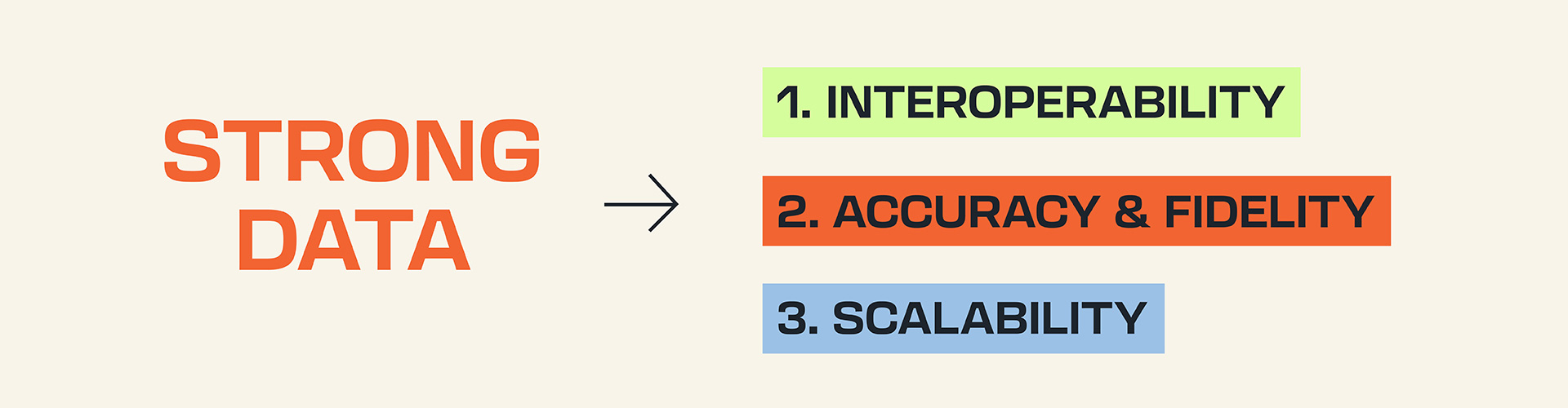
Collecting more data is not the answer. The goal must be to create strong data. Data that’s actually useful downstream, supported by strong process. The difference matters, because valuable information captured early in a project is routinely lost, recreated, or underutilized by the time it reaches the people who need it most. The result is rework, delays, and missed opportunities that compound across every project in a portfolio.
Strong data has three defining attributes:
What Makes Data Strong
1. Interoperability
Data must connect seamlessly with existing enterprise systems — asset management platforms, facilities tools, project management software. When systems talk to each other, data moves with the project instead of being left behind. That means less duplication, less manual re-entry, and fewer moments where critical information simply falls through the cracks.
2. Accuracy and Fidelity
Strong data meets the level of detail required for the task at hand — and it’s actively maintained as the project evolves. This reduces unknown field conditions and limits rework, but more importantly, it allows teams to make confident decisions earlier in the process, when those decisions are still low-cost to change.
3. Scalability
Data should be structured to work not just for a single project, but across an entire portfolio. Consistent processes enable organizations to gain portfolio-wide insights, benchmark performance, and make smarter strategic decisions at scale — turning individual project data into an organizational asset.
When these attributes come together, the business case is clear: minimized information loss, reduced rework, and insights that extend far beyond any single site or schedule.
Where to Start
You’re likely closer than you think. Success starts by building a clear roadmap through three phases:
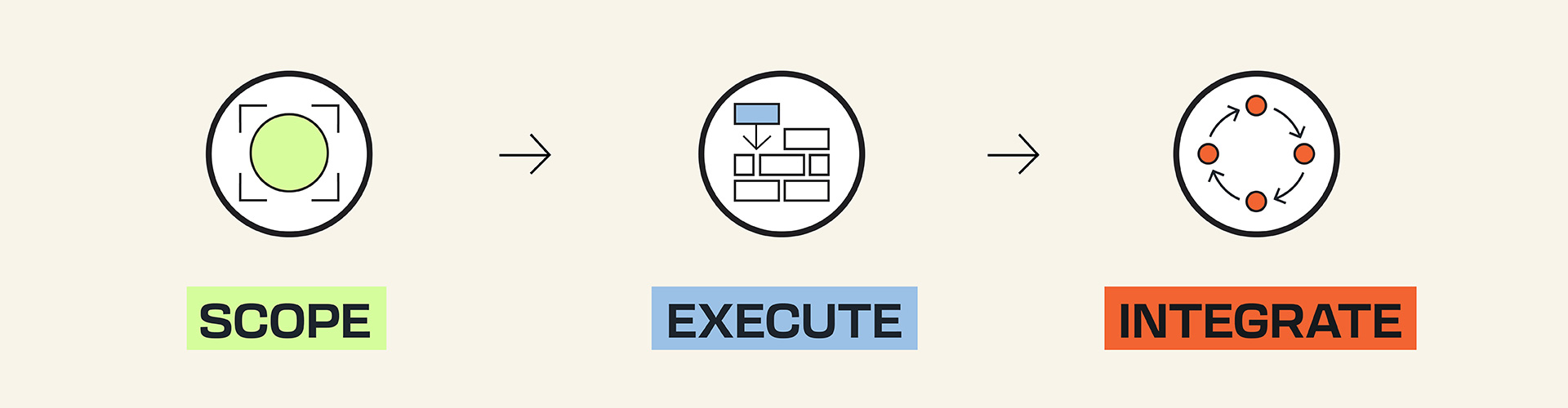
- Scope. Align stakeholders, define goals, and evaluate existing data. This is where you establish what “strong” looks like for your organization — what systems need to connect, what level of detail is required, and what success looks like at the portfolio level.
- Execute. Intentionally capture and structure information during design and construction, using technologies like reality capture and BIM. The key word is intentional — data created without a downstream purpose is data that will be recreated later.
- Integrate. Connect data into enterprise systems, dashboards, and operational workflows, allowing it to remain useful long after construction is complete. This is the step that turns a project deliverable into a living asset.
Like spatial digital twins, this process is as much about culture as technology — requiring data ownership, governance, and cross-team collaboration to sustain results over time.
The Future Belongs to the Well-Connected
The projects that deliver the most lasting value aren’t just well-designed. They’re well-connected. By treating design and construction as the foundation of digital infrastructure — not just a phase to get through — we can help our clients unlock the full potential of their data today, and carry it forward across the entire life of their portfolio.

Read more on this topic in Building the Future of Retail with Spatial Digital Twins.
Relevant Content
-
![Wayfind - Everything In Retail Has Changed. Have Stores Kept Up?]() Wayfind
WayfindEverything In Retail Has Changed. Have Stores Kept Up?
The Old Retail Playbook Is Gone—Adapt or Get Left Behind
-
![Wayfind - Design-Build Moved Retail Forward. Connected Delivery Moves the Program Forward.]() Wayfind
WayfindDesign-Build Moved Retail Forward. Connected Delivery Moves the Program Forward.
WD’s Model for Turning Integrated Project Delivery Into a Program-Wide Advantage for Multi-Site Rollouts
-
![Solution Story - Culto]() Solution Story
Solution StoryCulto
Creating a Sacred Space for the World’s Game
-
![Solution Story - DICK’S House of Sport]() Solution Story
Solution StoryDICK’S House of Sport
Reinventing Retail for the Next Generation of Athletes