

Feeding the Masses
Rethinking High-Volume Foodservice Operations
Estimated Read Time: 4 Minutes


When thousands of guests arrive hungry at the same time, foodservice becomes more than a convenience; it becomes a critical operational challenge. From theme parks and stadiums to large retail destinations, operators are asking the same questions:
- How do we serve more guests in less time?
- How do we maximize throughput while controlling labor costs?
- How do we improve speed of service without sacrificing the guest experience?
According to our Operations Strategy & Design experts Joanne Heyob and Rob Seely, the answer starts behind the scenes. “Before we start thinking about what that guest experience looks like, we need to make sure the engine is running properly,” says Seely.
That engine is the operational foundation—from kitchen layout to labor deployment—that ultimately determines whether high-volume foodservice runs smoothly or breaks down under pressure.
Start with the Engine
For high-volume environments, operational success begins in the back of house. Before design decisions are made, operators must understand the operational fundamentals:
- Menu mix and demand patterns
- Throughput targets
- Equipment capacity
- Operational workflows
This analysis ensures that kitchens are designed to support real-world demand. “We start with a deep dive into the menu, volume expectations and throughput targets,” Seely explains. “Then we evaluate the equipment and make sure it’s properly sized, so it doesn’t become the bottleneck.”
Right-sizing equipment is critical. Oversized equipment increases costs and consumes valuable space, while undersized equipment limits throughput and creates operational slowdowns.
The goal is simple: balance capacity with efficiency.
Optimizing Labor in a Challenging Market
Labor shortages continue to impact hospitality and foodservice operations across the industry. High-volume environments add another layer of complexity, often relying on seasonal staff and fluctuating demand.
To optimize staffing, our team uses industrial engineering tools like time-and-motion studies to analyze how work is actually performed. Performing these studies identifies opportunities to improve efficiency and productivity.
By establishing task-level time standards, operators can better understand exactly how much labor is needed at different volume levels. “This helps ensure we have the right amount of labor positioned in the right places at the right time,” Seely says.
The outcome is increased productivity, minimized idle time, and more effective scheduling across dayparts.
Designing the Guest Journey
While operational efficiency begins in the back of house, the guest experience ultimately determines success. In high-volume venues, dining often serves as a moment of pause. A chance for guests to recharge before continuing their day.
But long lines can quickly disrupt that experience. “Waiting in line is typically the number one frustration for guests,” Seely notes.
To address this, our team maps the entire guest journey, analyzing each step from entry to seating to identify potential friction points. Often, the biggest delays occur during the decision-making stage. Guests spend more time selecting items than operators expect, especially when menus are complex or visibility is limited.
Solutions can be surprisingly simple:
- Clearer menu presentation
- Better wayfinding and pre-order messaging
- Improved visibility of food options
Helping guests make decisions earlier in the process can dramatically improve throughput.
Rethinking Transactions and Dining Spaces
The transaction moment is another common bottleneck. Even small inefficiencies—slow POS systems, limited counter space or awkward tray placement—can add seconds to each transaction. During peak periods, those seconds quickly turn into long lines.
Breaking the transaction process into smaller components allows operators to identify opportunities for improvement, from adding additional checkout points to introducing self-service kiosks.
Dining spaces require similar analysis. Understanding how long guests stay, typical party sizes and the utilization of tables and seats allow operators to design seating layouts that maximize capacity without overcrowding.
It’s also important to account for real-world behaviors—like strollers, bags and accessibility needs—that often disrupt dining flow.
Where Automation Fits In
Automation and AI are increasingly part of the conversation around high-volume foodservice. But technology should support operations—not replace operational thinking.
“Automation can add tremendous value, but only if it’s implemented in a meaningful way and supported by the right data,” Seely explains.
When used effectively, technology can help:
- Improve food consistency
- Optimize labor scheduling
- Predict production needs
- Automate repetitive tasks
But successful implementation requires careful evaluation of reliability, capacity, and spatial impact within the operation.
The Future of High-Volume Foodservice
High-volume foodservice environments demand a careful balance between operational efficiency and guest experience.
By combining data-driven operational analysis with thoughtful design, operators can serve more guests, reduce friction, and create better dining experiences—even during the busiest moments. And it all starts with getting the engine right.
This idea isn’t limited to foodservice. In retail environments, operations often serve as the invisible infrastructure that makes experiential flagships work. As we explore in our article, The Hidden Engine of Flagships, the most memorable customer experiences are often powered by systems customers never see.
See it in action: WD partnered with SeaWorld to optimize foodservice operations across its parks, improving throughput, guest flow and operational efficiency in high-volume environments. Explore the solution story.




About Wayfind
Wayfind—the WD blog—is designed to be your beacon in this rapidly evolving world. In these short, thought-provoking reads, you'll discover insights into the minds of your consumers and be inspired to go out into the world to create your own extraordinary experiences.
Relevant Content
-
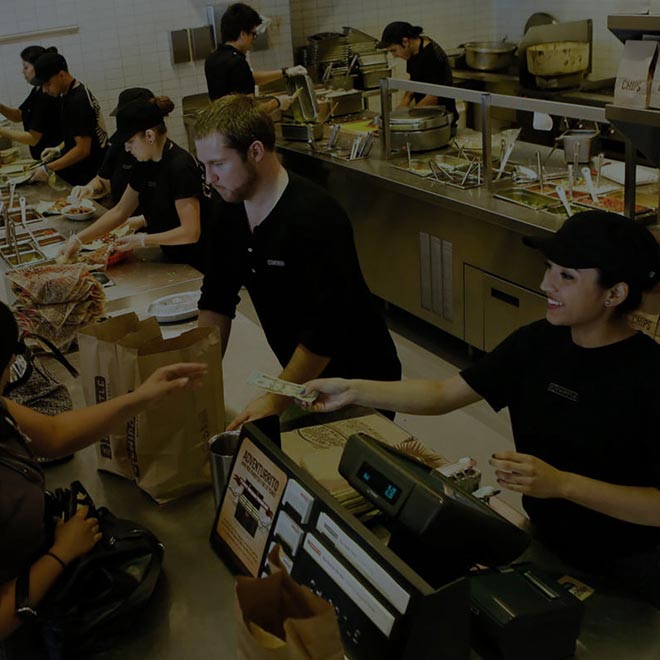 Point of View
Restaurants Rise Again
Time to Embrace a Portfolio Strategy -
 Solution Story
BJ’s Brewhouse
A Longstanding Partnership Driving Nationwide Growth -
 Point of View
What Do Consumers Actually Want from the Drive-Thru of the Future?
It’s Much Simpler Than You Might Think -
 Wayfind
Five Key Takeaways from NAFEM 2025
How Foodservice Equipment Innovation is Meeting Operator Needs Today