When Expectations Travel
And How to Become Placemakers of the Future
Estimated Read Time: 8 Minutes


Exceptional experiences don’t stay neatly inside their categories. Every interaction becomes the new baseline for the way we engage with the world around us. Disruptors of the past have become today’s table stakes. The ease of ordering from Amazon, the personalization of Spotify, the hospitality of a hotels above par, or the simplicity of an Uber ride—all quietly reset the ways we live every day.
Once customers know better experiences are possible, that’s their pursuit. As the world of mobility moves faster, more connected and more accessible, the opportunity for brands is bigger than removing friction.
As mobility brands remove the friction of getting there, the feeling of being somewhere becomes even more monumental.
THE QUICK TAKE: Mobility innovation is making the world feel smaller. As movement becomes increasingly seamless, the challenge for brands will shift from simply helping people get somewhere to ensuring that somewhere still feels distinct.
NOW — Expectations On The Move.
Mobility today is no longer simply about moving from one point to another. It is a network of physical and digital experiences that shapes how people navigate the world, discover destinations, and move through their lives. Mobility experiences that previously seemed futuristic are moving towards mainstream, and transit is becoming more of an ecosystem than a means.
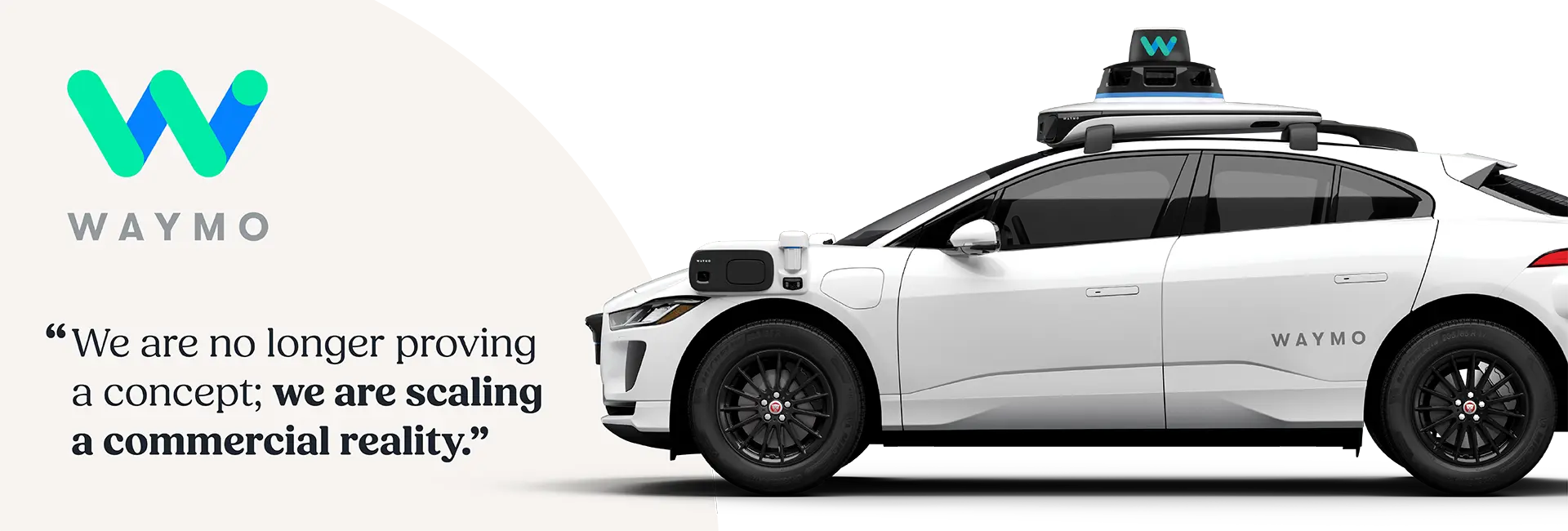
Waymo aims to offer “freedom of movement for all” and positions as the world’s most trusted driver with data backing its consistency over the fallacies of a human driver. From a customer adoption perspective, sentiment is mixed. Waymo technology is ready to launch in London with its all-electric Jaguar PACE fleet, but locals are quite hesitant. Conversely, Tokyo residents are curious and willing, but the technology is still catching up to the complexities of safely and accurately navigating the dense urban map. Waymo’s San Francisco rider research indicates that about 36% of riders have used rides to connect to public transport busses or trains. Earlier this year, Waymo described the shift succinctly: “We are no longer proving a concept; we are scaling a commercial reality.”
The important part isn’t simply that the car can drive itself. It is that the boundaries between car, transit, technology and service are beginning to blur. The expectation is moving from: How do I get there? to: Why should getting there feel difficult at all?
What Does This Mean for Brands Serving Mobility and Beyond?
The better mobility becomes, the more critical the experience around mobility also becomes. When technology removes friction from the journey, every piece of physical friction around it becomes more noticeable. The confusing pickup zone. When hospitality elevates mundane into meaningful, every sub-par interaction speaks volumes. The generic waiting room. When service brands remember your needs and proactively anticipate for you, ruptured relationship moments get remembered. The counter that makes you repeat information you already provided digitally.
Today’s challenge is for brands to keep up with the mobility renaissance without risking their relationships with customers. Mobility is no longer a process or service to design around—it’s an opportunity to design through. The spaces that connect us to somewhere can become destinations that offer flavor, anticipation, discovery, and belonging. The journey becomes part of the experience, and the experience becomes part of the place.
NEXT — When Distance Hits Different
The next wave of mobility innovation won’t just make transportation faster. It will redefine what we consider nearby. An estimated 1.52 billion international tourist arrivals were recorded globally in 2025, nearly 60 million more than the year before (UN Tourism, 2026). Every trip expands our minds and makes our world a little more connected by exposing people to new ideas, services, cultures, and brands. And every exceptional experience today becomes tomorrow’s expectation.
Electric air taxis (called “electric vertical takeoff and landing aircraft” or eVTOLs) aim to bypass urban gridlock to reduce commute times and redefine metropolitan boundaries. And it’s not just theoretical—the tech is taking flight. The FAA (Federal Aviation Administration) has already established operating rules for powered-lift aircraft and, in March 2026, selected eight proposals for its Advanced Air Mobility and eVTOL Integration Pilot Program.
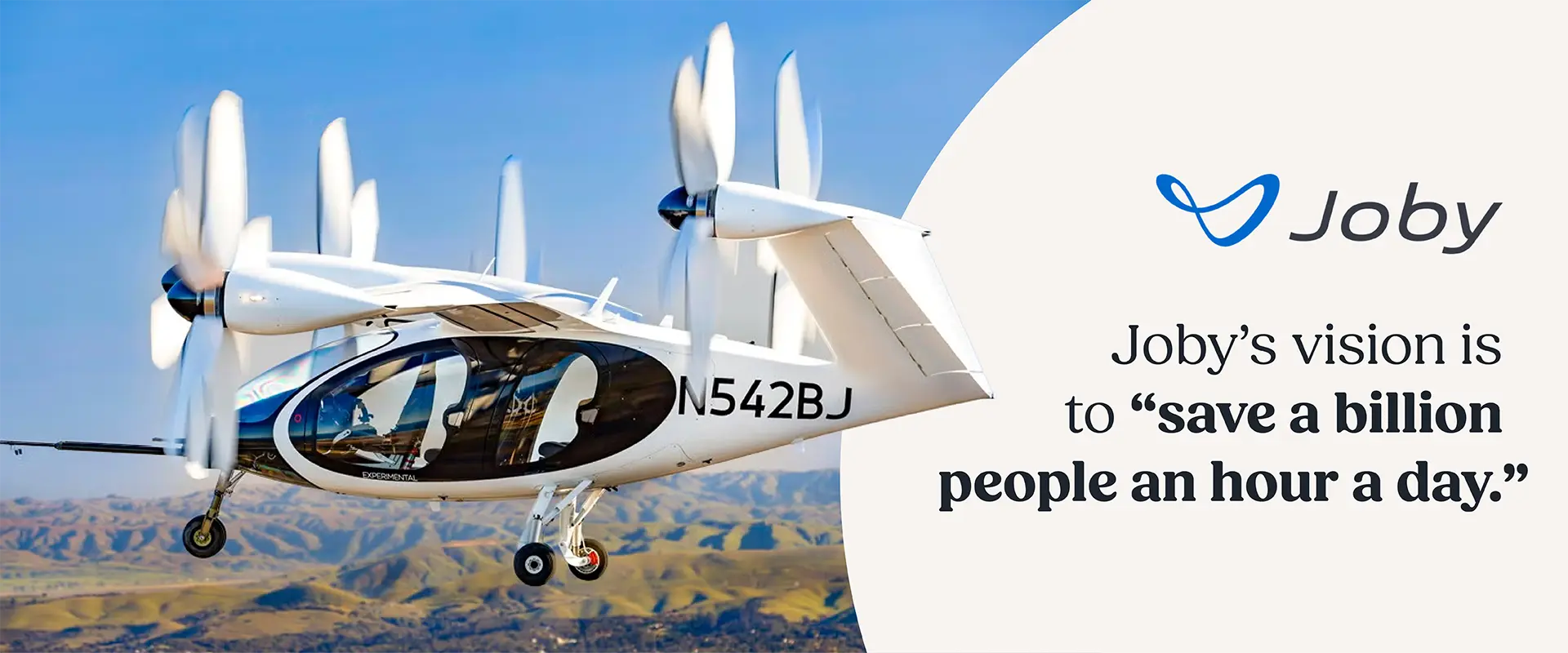
Joby Aviation is pushing the idea further with its mission to “save a billion people an hour a day.” Its planned experience creates a transit ecosystem, connecting ground transportation with electric vertical flight through one journey, including an Uber ride to and from the vertiport. Joby projects a six-minute JFK-to-Manhattan flight, a mind-blowing figure. They’ve completed numerous impressive test flights in Dubia and are currently developing vertiports at Dubai Mall and Atlantis The Royal, among others.
Whether every projected route develops exactly as planned is less important than the change in mindset it illustrates. The physical distance stays the same. The experienced distance gets smaller. A destination that used to feel like a day trip can start to feel like an afternoon. A suburb can behave more like a neighborhood. The airport can become less of a boundary between city and journey.
What Does This Mean for Customer Lifestyle and Expectations?
Mobility begins to redraw our mental maps, and this creates a paradox: The easier everywhere becomes to reach, the more valuable somewhere becomes.
Consumers are already telling us they value local difference.
- Booking.com’s 2025 global research across 32,000 travelers found 77% seek authentic experiences representative of local culture, while 73% want the money they spend to flow back into the local community.
- American Express Travel found a similar pattern in its 2026 research: 82% of global respondents said hands-on experiences give them a greater appreciation for local culture. Among millennial and Gen Z respondents, 79% said they were likely to seek structured activities specific to the destination they were visiting.
The implication is important. People aren’t asking for the world to become homogenous just because it becomes easier to access. Exceptional experiences are those that are distinct and confident, not just making you feel something—punctuating the value of being somewhere.
FUTURE — Geography Without Boundaries
Push the horizon further and mobility begins to look much less familiar. Autonomous vehicles become part of everyday transportation ecosytems. Electric aircraft connect destinations from rooftops and mobility hubs. And even the basic shape of the commercial airplane could change.
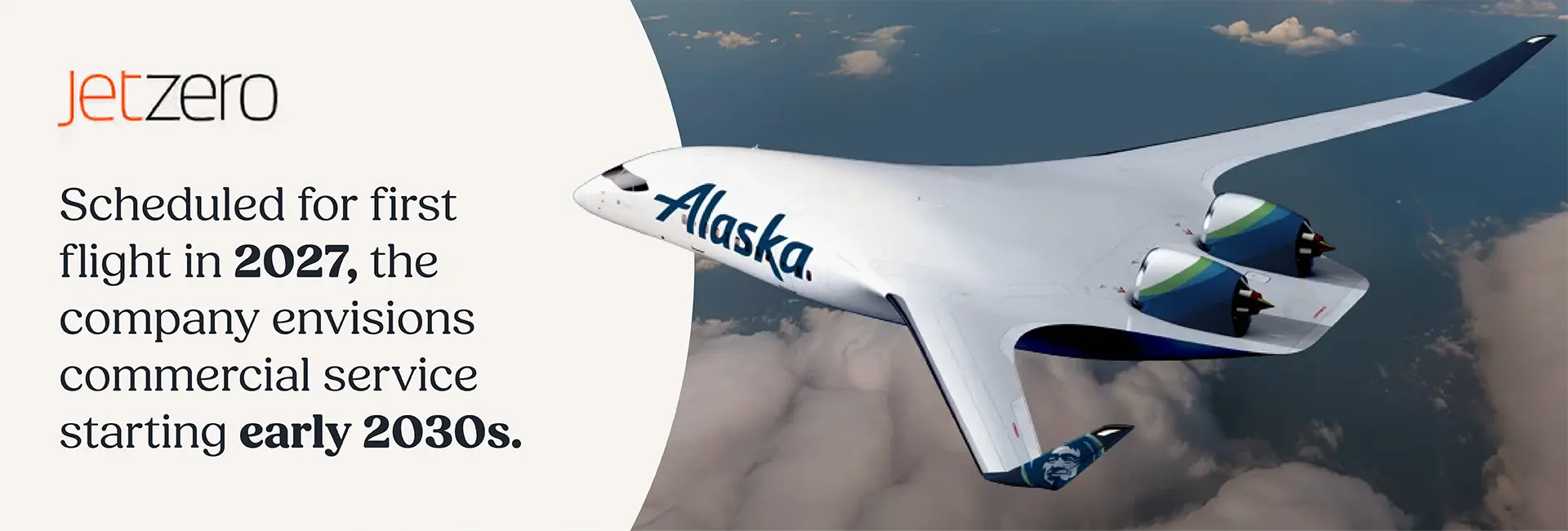
JetZero aims to design “pie in the sky” into reality. They are currently building a fully-functional, low-drag, lightweight jet that increases cabin space while using 50% of today’s commercial jets. Scheduled for first flight in 2027, the company envisions commercial service starting early 2030s.
These are just a few examples of emerging future mobility concepts, but predicting exactly which technology wins misses the bigger point.
What Happens to Life Without the Boundaries of Geography?
Two forces are likely to occur simultaneously and contradictory to each other.
- Convergence: The world becomes faster and more seamless, connected by the same technology, brands, services and that make hyper-mobility possible. However, as our personal worlds expand, unique regional character and fragmented sense of belonging is likely.
- Divergence: Human desire for individuality drives micro-place reclamation of distinct culture and need for belonging fuels intentional redefinition of a broadened sense of belonging.
The future of mobility therefore creates challenges that go far beyond transportation engineering. Brands that win will embrace the future of placemaking and its role in creating both seamlessness and belonging, navigating the forces of convergence and divergence. Will brands be forced to serve one outcome or the other, or can they bridge the two, meeting customers in their opposing need states?
TAKING ACTION TODAY
How Do Brands Narrow Focus Now While Thinking for Next and Future?
As technology and infrastructure get more complex, the trajectory for customer experience expectations does not change. To break it down, the mobility ecosystem of the future could become incredibly sophisticated behind the scenes. The customer experience cannot—it must continue becoming more simple and seamless.
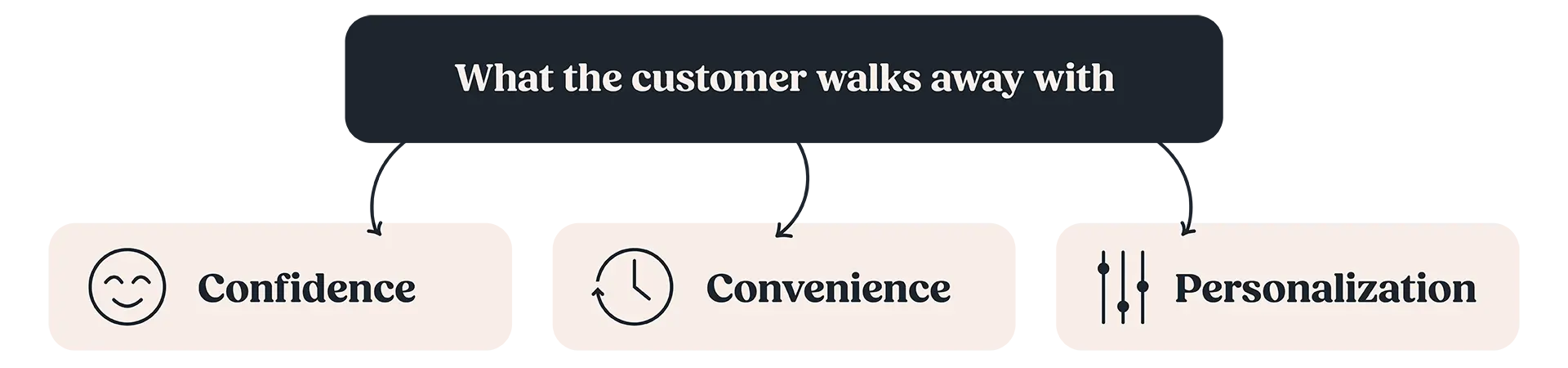
- CONFIDENCE
The more complex mobility becomes behind the scenes, the simpler and more trustworthy it must feel in front of the customer. As autonomous vehicles, AI, digital identity and new modes of transportation become more prominent, brands will need to make unfamiliar experiences feel understandable and dependable. Innovation without confidence is friction. - CONVENIENCE
Seamless will become the baseline, not the differentiator. Joby’s vision of coordinating air and ground transportation through a single journey is an early example of where expectations may be headed. Tomorrow’s traveler isn’t going to care which company owns each piece of the journey. They only care that it works. - PERSONALIZATION
Know me—but also know where I am. Personalization shouldn’t stop at remembering a loyalty number or previous trip. The next level is contextual. Why am I here? What do I need? What is different about this location? What would make this journey feel relevant here?
How Do We Become Recognizable Everywhere, Rooted Somewhere?
Global consistency cannot mean global sameness. Some of the best examples aren’t coming from mobility brands at all.
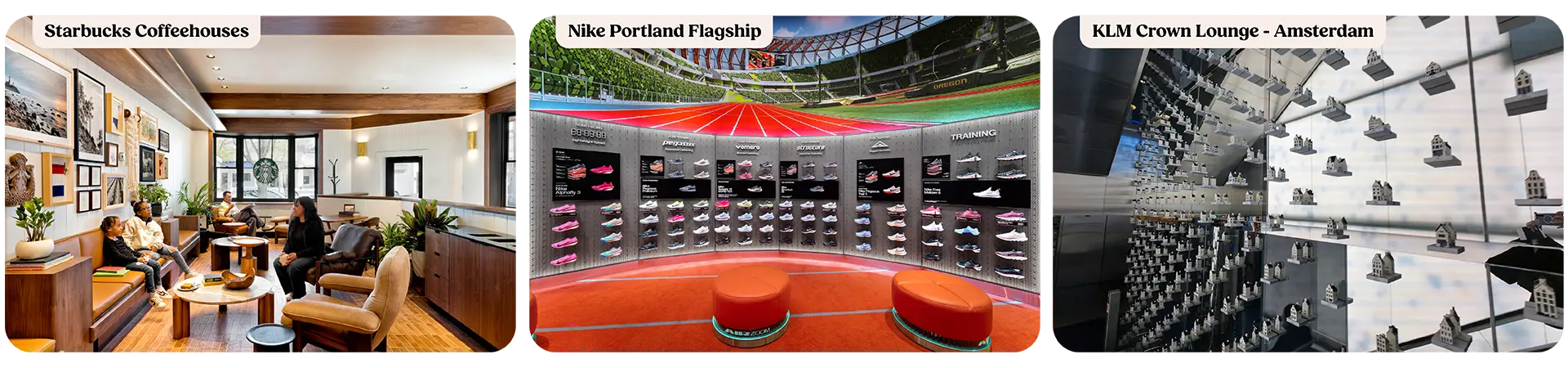
- Starbucks is currently redesigning its coffeehouses around a combination of recognizable brand experience and local character. More than 1,000 locations are planned for uplift by the end of 2026, while individual stores incorporate community history, local cues, art, materials and different layouts. Starbucks itself calls one principle simply “A local look.”
- The takeaway: Brand consistency can come from the experience signature and the product while infusing a local sense of pride.
- Nike is taking a similar approach. Its redesigned Portland flagship combines global Nike innovation with local teams, running culture and the brand’s Oregon heritage. Nike describes the store as “infusing hyperlocal relevance” into its global retail strategy.
- The takeaway: Firm up your channel strategies. The advantage of direct-to-consumer channels is the ability for brand to have a rich customer experience. Double down on that.
- KLM brings a distinctly Dutch sense of place into its airport experience, turning Delft Blue into a brand signature and artfully displaying miniature replicas of iconic Dutch buildings. Design and hospitality details that offer a taste of local culture, food, and craft so the journey feels like a warm welcome to the Netherlands.
- The takeaway: Brand relationships aren’t just about the outcome. Bring romance to the journey, not just the destination.
ARTICLE AT A GLANCE
The future of mobility isn’t just about how people move. It’s about how movement changes place.
Mobility innovation will continue to compress the way we experience distance. Our expectations will travel farther. Categories will blur. Journeys will become easier. And more of the world will feel within reach.
But a smaller world doesn’t have to become generic. For the brands, retailers, airports, mobility providers and environments that sit along these journeys, the opportunity is to create systems that deliver confidence, convenience and personalization at scale—while preserving the character that tells us we’ve actually arrived somewhere.
At WD Partners, we are placemakers of the future. We design and build for brands, retailers, restaurants, and service providers that remove the friction of getting there. And we take that one step farther to preserve the feeling of being somewhere.
-
![Solution Story - Nike]() Solution Story
Solution StoryNike
Creating a Connected View of Global Retail Performance
-
![Solution Story - Walmart Fire Protection]() Solution Story
Solution StoryWalmart Fire Protection
Engineering Fire Safety for Thousands of Stores
-
![Wayfind - Is Your Brand Experience Living Up to Expectations?]() Wayfind
WayfindIs Your Brand Experience Living Up to Expectations?
Market Realities vs Glass Tower Idealism and the Role of Assessments
-
![Wayfind - EchoPark’s Sustainable Approach to Design & Build]() Wayfind
WayfindEchoPark’s Sustainable Approach to Design & Build
A Case Study on Redefining Sustainability in Retail and Real Estate